Bookseeker Literary Agency

Introducing authors and publishers.


‘The Everywhen Angels’ by Marie Marshall – now available worldwide!

Angels Amazon coverMarie Marshall‘s stunning second novel, The Everywhen Angels, is now available worldwide in print and in Kindle format from Amazon, and direct from the publisher in eBook form. P’kaboo Publishers, for whom this agency is the UK ‘face’ is an indie publisher from South Africa. Though they might not have the clout, nor the advertising budget, of larger companies, they are in no way a ‘vanity publisher’. They offered Marie a commercial contract for her first two novels, Lupa, and The Everywhen Angels, and commissioned her to write a teen-vampire novel (From My Cold, Undead Hand – possibly to be published later in 2014). However, as a small publisher, P’kaboo acknowledges that it is in many ways a ‘first step’ for authors, and that if they can have their books taken up by one of the larger publishing houses then they should do so. P’kaboo’s blessing to them and recommendation to the other publisher can be taken for granted.

So, this agency’s next task is not only to promote the novel to readers, but also to UK publishers – starting here and now. If you’re reading this and are from a publishing house in the UK, the USA, or anywhere in the English-reading world, you have your next  YA best seller right here!

The novel was written in response to a lively discussion Marie Marshall had with friends about the merits of a series of books by a fellow Scot, set in a school for wizards. Responding to a challenge, she wrote an intriguing story, full of twists and turns, setting it in a Comprehensive school somewhere on the outskirts of London, in which groups of teenagers appear to find themselves coming together to skirmish on what might turn out to be the battlefield of Armageddon. But does this really have anything to do with the ‘End Times’? They struggle with teenage problems – relationships, bullying, parents, and each other – whilst trying to make sense of a world in which sense becomes harder to grasp. The plot twists, turns, runs backwards, contradicts itself, asks very deep philosophical questions, but still turns out to be enthralling and enjoyable. The author takes risks with it, but she says: “I believe children can handle difficult philosophical questions. They can handle stories told in a strange way. Young readers are much more intelligent than adults give them credit for.

Publishers – get in touch, don’t let this opportunity slip by. Here are some comments about the novel.

Nikki Mason at BestChickLit.com says:
“… Three extraordinary kids. Three astounding stories. What will you believe? Angela is just an ordinary teenager until the day she falls through a fence at school into the alternative reality of the Guardian Angels, a group of twelve teens who are tasked with protecting people in the build up of the final war between good and evil. But no one will answer Angela’s question: why? Charlie knows he is special. Of course he’s a Guardian Angel. But he is also a Yellow – the GA’s rivals who try to prevent all their good work. But why is everyone suddenly ignoring him? Ashe is diagnosed with Aspergers Syndrome and yet he can open doors between worlds and time. He understands what it really means to be a Guardian Angel but can he cope with the knowledge alone?

Marie Marshall tackles big subjects in The Everywhen Angels from religion and science to war and politics. All this rages on in the foreground of the lives of three teenagers who are trying to find their place in their world and be comfortable in their own skin. Action packed, full of crazy tangents, incredible ideas and stunning description, the novel is completely different to anything I have read before. It can at times be confusing, but bear with the story – the mind-boggling themes and plot diversions will be explained and will feed the curious minds of young adults…”

Other readers comment:

“… the book is something special. The characterisation is convincing. The narrative is entertaining and gripping, but at the same time shows a wealth of knowledge and research and introduces challenging food for thought on abstract matters…”

“… The Everywhen Angels by Marie Marshall is told through the eyes of three different teenagers in a school somewhere in England, as they take on the function of angels. They discover along with a small band of others that they have supernatural abilities which they are obliged to keep secret, however. How they put these abilities to use, for good or bad, that is the matter of the story. This book challenges its reader to face deep, existential questions; about life, the nature of the universe, the ‘ending times’ and what they mean (from several different perspectives); what is good and what is bad, or is there, and if so, by which right or logic do we interfere in what happens to others. The story left me feeling somewhat rattled and as though my cupboard of philosophies has received a good airing and spring-cleaning, and I now need to put things back and decide what to keep.  It is an excellent book; one of those ‘clingy’ ones that stays with you for days after because you have to think about it…”


News Items, 24th November 2013

phoenix22 Our client Marie Marshall reports that The Phoenix Rising from the Ashes, the first major anthology of sonnets of the early third millennium is now published. Marie is Deputy Editor of this magnum opus; details can be found here, and will be up-dated as often as necessary. There are still some eBook copies of Marie’s novel Lupa available for free download at P’kaboo Publishers; look for the link which says ‘Winning Title! Limited Free Download’.

Marie also reports that her novel for older children, The Everywhen Angels, is still in the preparation stage. She has finished her new teen-vampire novella, and is in talks not only with her publisher, but also with an illustrator with a view to presenting it as a graphic novel. More news as it is available.

The Aval-Ballan Poetry Competition is long over, but occasionally their web site receives selfies from the prizewinners with their prizes. Here’s one from Sam Smith.

There is a new concern that hosts selected books with an adult content. It goes under the name of HoneyMead Books, and you can find its wed site by clicking the logo at the bottom of this update. It is by no means a come-as-you-please self-publishing site. Ian Rossouw of HoneyMead says that each book  they publish as an eBook will be carefully vetted for strong story-lines that must take the forefront. Also all books that go through HoneyMead Books still undergo editing etc. as with every traditional publisher and unlike self-publishing sites. Worth keeping an eye on this publisher if you write adult-themed fiction.

logo


Free e-books at P’kaboo – Hurry!

books

P’kaboo publishers are offering a limited number of copies of four of their most popular books as free-of-charge e-books. This is in conjunction with the second stage of their ‘Facebook Share’ contest, but if you download one of the offered books there’s no obligation to enter the contest. If you do enter, all you have to do is write a review of one or more of the books – you could win a printed copy signed by the author. We’ll let you know how and where to submit your review in due course. You can access P’kaboo’s online bookshop by clicking on the picture above. The four titles you’ll be looking for are as follows, hurry while free stocks last:

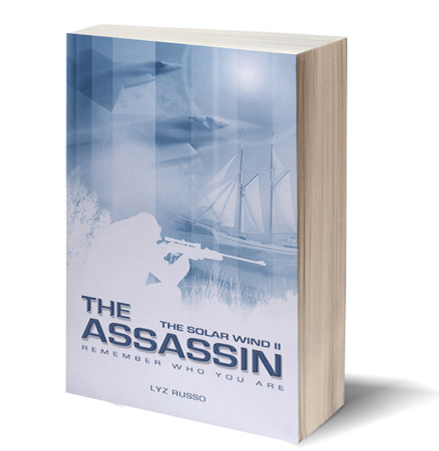
Solar Wind I: The Mystery of The Solar Wind, by Lyz Russo. This is the first in a series of futuristic adventures. Once you’re into it you’ll want to read the whole series and sail with Captain Radomir round the oceans of the future.

Lupa, by Marie Marshall. What is reality and what is illusion? This short, punchy novel, suitable for adults, young adults, and older children asks that question by means of the strangely parallel stories of a female gladiator in ancient Rome, and a Bosnian Serb refugee in late twentieth century Rome.

Almost Dead in Suburbia, by Doulgas Pearce. If you’re wondering why the person opposite you in the train is chuckling, it’s probably because he’s reading this witty, macabre mystery. Two friends are involved in an accident. However, only one is really dead, the other was only a little hasty…

Tabika, by Leslie Hyla Winton Noble. A precision-write for children. Life on Green Farm will never be the same after Tabika the cat is ‘magicked’ there from Johannesburg by a grateful fairy. The farmer says “I don’t believe it!” – so will you, and you’ll want to read Tabika 2.


Interview with the late Hector P Cortes

Hector P CortesWe recently received the sad new that our client Hector P Cortes died in hospital on 23rd September. Hector’s family and friends have our sincere sympathy. On a practical note, we will continue to offer Hector’s novel ‘Miura’ to publishers on behalf of his estate. Almost the last thing Hector did before his final illness incapacitated him, was to answer some interview questions for us. We’re very grateful to Hector’s daughter Daniella Robles for her help and for permission to publish the interview, which we do now as a tribute to Hector.

Hector, How did you start writing? What gave you the first impetus to put pen to paper? When did you first start to take yourself seriously as a writer?

Early 2000 – I felt like having a bit of a laugh at the expense of musicians and a lifetime of anecdotes and personal experiences (mine and those of other muzos!) turned into a book called ‘Blow Job; Memoirs of a Trombone Player’. I was hooked on writing from then.

What genres do you write in, and what attracts you to them?

I’m not really attracted to any particular genre, the stories just happen. I’ve written historical novels, thrillers, comedies…I just go with the flow.

When you read a piece of writing by another author, what stands out for you? What do you admire in another writer, what thrills and delights you? Equally, what features of literature today do you dislike?

I like a sense of excitement, a maintained pace and historical fact-based plot-lines; Bernard Cromwell’s ‘Sharpe’ series are ones that stand out for these reasons, and I like his style. The only thing that puts me off an author is if he bores me within the first half of a book – it’s hard for me to get bored reading any book as I love so many different styles so to bore me into putting it down is quite an achievement!

Whose writing do you particularly admire, and why?

For the reasons stated earlier, I truly admire Bernard Cromwell, Carlos Ruiz Zafón who wrote ‘The Shadow of the Wind’ because of his story-telling and peculiar but readably style, and Charles Klein who wrote ‘The Music Master’; perhaps this last one is not well known as it was first published in 1909, but he draws on emotion very strongly and that appeals to me.

Do you read hardbacks, paperbacks, or ebooks?

Always paper! I prefer the feel of a real book in my hands.

Is there still a place today for the printed book?

Of course – they will never be replaced. Nothing beats the smell of a new book or the feel of it in your hands.

You’re a Gibraltarian who has written a story about Spain. How close would a Gibraltarian be to Spain culturally? What would give a Gibraltarian – you in particular – an insight into Spanish history and culture?

I’ve been told before by readers of my other books that I identify very personally with Spain – and I do because I write from what I know. Both culturally and emotionally, as a Gibraltarian the Spanish culture is very much in my blood, all politics aside!

Your novel ‘Miura’ covers a very dynamic and difficult period of Spanish history, the full details of which are still emerging. What drew you to this period and inspired you to write this novel? Did you need to do much research?

The novel was inspired by historical events and conditions that, as a Gibraltarian, my parents and I actually lived through. The knowledge of the bullfights also comes from my experiences as a boy and young man going to see them. What started off as a work of fiction for me, became a historically accurate novel once the death of Franco was woven into it – I uncovered incredible research from various online sources which brought out facts about Franco’s death, rather than the ‘propaganda’ version the Spanish Government put out there at the time.

Do you identify with any of the characters, and if so, why do you think that is?

I don’t personally identify with any one character – never been a bullfighter or a doctor – but I do identify with the combined ethos of the characters.

How do you unwind when you’re not writing?

I spend a lot of my time on Facebook talking to my friends, both old and new. It’s a wonderful way to keep in touch with people.

Imagine your house is on fire and you just have time to grab three books from your bookshelf. Given that most books can be replaced at the local bookshop, what three books are irreplaceable for you, and why?

This is an easy question for me – it would be: My original copies of ‘Music Master’ (Charles Klein) and ‘A Christmas Carol’ (Charles Dickens) because they have been my favourite books since my youth and take me right back there whenever I pick them up. And finally my original copy of King Arthur and his Knights (as retold by Blanche Wilder) as I have always been fascinated by those stories – in fact they play a great part in some of my other published books; and I have instilled that love of Arthurian legend in my daughter Daniella who in turn is already teaching my two little grandchildren all about it.

If you could meet one literary person, past or present, real or a fictional character, who would it be?

Charles Dickens – the man clearly had a good sense of humour and seemed to be quite a character, and he wrote about the social injustices of his day which I spend a lot of time doing online! We’d certainly have a lot to talk about…


And the Winner Is:

I got an email from my client Marie Marshall, a few minutes ago, with the news that her novel Lupa had crossed the winning post ahead of the other books in the P’kaboo Facebook Share Contest. “I know it seems weird celebrating the fact that my book is going to be given away free,” she said, “but it’s all in the good cause of raising its profile. Amen to that.

The next stage in the contest will be offering a limited number of printed, signed copies to people who write reviews of the novels in the contest. Stay tuned.

gipsika's avatarthe red ant

Blank bookcover with clipping path

Lupa by Marie Marshall

is the first of our Facebook Share contestants to move into the “Free Downloads Zone”.

The “Zone” will open on the 1st of October, so stay tuned…  A limited number of copies is going to become available for free download, from the P’kaboo website.

There is something immensely satisfying in being the first in something.  Well done, Marie!

Please boost the other books, too:

Visit this page and share books to move more into the “Zone”.


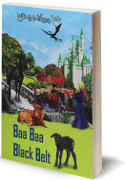
LupaTabika 1Almost Dead in SuburbiaMercury SilverBaa Baa Black BeltSolar Wind 1Solar Wind 2


Thank you for participating!

And now gipsika will steal away and prepare for her daughter’s 16th birthday, and a corporate gig she’s playing in Joburg next week.

View original post


Publisher seeks authors!

trajans column1

Can you write a novel, post-haste on any of these subjects?

an erotica book about a domineering man who bequeaths his wife in his will to his best friend

a classical-historical novel about siege engineers in Rome

a funny, sweet contemporary romance set at Christmas 

any other ‘seasonal romance’

If so, please get in touch using the email address on our ‘Contact’ page. We have been asked to find novels along the above lines by a reputable UK publisher who needs you to write quickly and ‘to brief’. These novels would all be commissioned on a world rights basis and for ebook only publication.

[Standard agency commission applies.]


The P’kaboo Facebook Share Contest goes live

There’s a chance for people to get their hands on a free e-book from P’kaboo publishers simply by ‘liking’ one or more of a choice of seven of their books on Facebook, Go here for details. There’s also a chance to win an autographed copy of a book by writing a review of it.

Also on line today is a reading by a fan from New Orleans of Marie Marshall’s poem ‘Plain Jane $3.99’, from her 2010 collection Naked in the Sea. Listen to it here.


Marie Marshall’s ‘Lupa’ reviewed

BestChickLitBanner

Lupa-cover-©-PKaboo-Publishers2BestChickLit.com is a web site dedicated to providing reviews of women’s fiction. They don’t confine themselves to reviews of ‘chick lit’, but say “Our review policy is very simple: any type of fiction books by female authors are accepted. Easy.” They will work for ‘indie’ and self-published authors too, but also review books from publishing houses such as Random House, Little Brown, Headline, Penguin and Quercus. Hot on the pages today is a review by Nikki Mason of our client Marie Marshall’s novel Lupa. “Such an interesting book!” Nikki tweeted. “Can’t wait to read more.” Well, she won’t have to wait long, as Marie’s second novel The Everywhen Angels is being galley-proofed right now. To read Nikki’s review click here, or click the book cover.


Aval-Ballan Poetry Competition results published!

aval-ballan

The long-awaited results of the Aval-Ballan Poetry Competition are now published. Congratulations to the winner and the runners-up. We’ll keep you posted about events relating to this competition (prize-givings, exhibitions, etc), and it would be a good idea to ‘follow’ the competition web site in order to read the winning poems.


Some of our dos and don’ts.

frustration-hi

The following isn’t a list of dos and don’ts for you, but rather it’s an explanation of a few things we look out for, and our attitude to them.

Firstly, when we take on a client’s book as a project, we don’t simply flood all the UK publishers with its details. We start by looking through publishers’ details on firstwriter.com or in our 2011 copy of The Writer’s Handbook – that’s the last year it was published, but it still contains interesting information – or through a few other handy sources we know of. We make a selection of likely publishers and prepare an approach to them. Amongst the hundreds of publishers out there we find:

no agentsPublishers who say “We do not deal with agents”.

This is okay in the case of small poetry presses. We’ve always said that agents tend to get in the way when it comes to poetry submissions. However, in the case of mainstream fiction publishing, for example, obviously we won’t contact someone on your behalf who states specifically that they don’t want to hear from us. We do have our doubts, however, about why they would encourage an author not to have someone to look after his or her interests. Go into deals with such publishers with your eyes open, and if there is anything about the deal they offer that doesn’t strike you as being 100%, don’t let them put you off seeking impartial advice, or from bringing in an agent at that stage.

Vanity publishers.

We will not deal with them at all. There are so many of them with listings at firstwriter.com but most of them can be filtered out in a search. However, they are good at disguising themselves, and it’s often necessary to read the feedback to find them out.

Publishers who offer packages which include author-subsidised ones.

Many smaller publishing houses do include such packages, in order to finance wider publishing; if they also offer outright commercial contracts then that’s fine by us – we consider such publishing houses to be legitimate, and in fact we have a good ongoing relationship with one such publisher. However, our prime concern is to get commercial contracts with for our clients, and that’s what we’ll push for.

Publishers who charge ‘reading fees’.reading-clipart-3

Again, many publishing houses do offer other clearly defined services, such as reading agency or editorial services – that’s fine. For a publisher to charge simply for reading a submitted manuscript is another matter. It’s not something we like to see, even though some perfectly respectable publishing houses have been known to do it.

Publishers with genuine bad feedback from authors.

firstwriter.com gives authors the opportunity to comment on their dealings with any business that has an entry. We always look at those. It’s easy to dismiss those that simply display pique at rejection – many rejection slips are curt and that’s that, it goes with the territory – but other comments are very valuable in pointing out both problems and good points. It’s amazing how many ‘publishing houses’ there are out there that exist in name only, that seem to offer the chance of a commercial contract, but then send a rejection along with a suggestion that you try their ‘sister company’, which will always be a vanity publisher!

Publishers who expect authors to be pro-active in marketing and promotion.

This isn’t unreasonable, particularly for smaller presses. However it’s a matter of degree. Disabled authors, including one with ‘unseen disabilities’, or someone living remotely, are unlikely to be able to do much direct selling themselves. A few book-signings and readings are fairly standard, but we would discourage a client from committing to widespread travelling at his or her own expense. There’s nothing unreasonable about being asked by a small publisher how many of your own books you would be prepared to buy; being expected to buy a minimum, particularly if that ‘minimum’ is fairly large, is almost tantamount to vanity publishing, and should be approached carefully.

Publishers who reply to an email enquiry with an automatic “We do not accept submissions by email” message.

Yes, we get some like that, even were we to put “THIS IS NOT A SUBMISSION” in the subject box of our initial email! We make a note of publishers who don’t even read the first line of what they’re sent.

Strangely, publishers seem to be split evenly between those who don’t accept submissions by email and those who don’t accept hard copy. Each group has its own reasons (and they sound similar!), but when it comes down to it we wish those who don’t accept submissions by email would realise that this is the 21st century.

There are, of course, exceptions to all the above, and some set-ups suit some authors but not others. Mainstream publishers can’t afford to take on every hopeful author – probably less than 2% of everything submitted is published – and the other businesses are there to accommodate the 98%. Many authors decide to self-publish, and some do so quite successfully, which brings us on to another topic.

Do we represent books that have already been self-published?

We tend not to. That’s not an absolute, but by and large we see that a self-published book brings along its own problems. Most publishers, if they’re taking on new work, will prefer that it is entirely new. The sales figures from your self-published book are a two-edged sword. If they have been meager, then that is sometimes seen as an indication that the book is unsellable; if they have been comparatively large, then that is sometimes seen as eating too far into potential sales. It can be a lose-lose situation.

woman-writing-letters-by-charles-dana-gibsonSo please don’t expect miracles from us if we take on your work as a project, and don’t assume that if we report back to you that we’ve met with no success that means we haven’t been doing our job. Nothing could be further from the truth. Above all, be very proud of the fact that you have produced a book – a work of art, if you like.

__________

firstwriter.com publish a couple of very interesting articles on how to spot a scam literary agent, and how to choose a good one. We don’t appear to tick any of the boxes in the first article, and only miss a few in the second, mainly because we’re not a ‘big’ agency. So far so good.