 Our client Carmen Capuano‘s new novel Split Decision has been taken up by P’kaboo Publishers, and is due out early in 2015. We’ll keep you posted. Meanwhile our congratulations go to Carmen, and also to P’kaboo on their choice!

Our client Carmen Capuano‘s new novel Split Decision has been taken up by P’kaboo Publishers, and is due out early in 2015. We’ll keep you posted. Meanwhile our congratulations go to Carmen, and also to P’kaboo on their choice!
Nikki Mason from BestChickLit.com is the first reviewer of Marie Marshall’s teen-vampire novel From My Cold, Undead Hand. The review is to be found in the site’s ‘Young Adult’ section. Nikki describes it as “a great adventure book”, and we can testify to that! You can read the review here.
 HoneyMead Books in South Africa is looking for authors of good quality, adult-themed fiction for its e-book list. Do you have a penchant for the off-beat, the wacky, the graphic, the horrific, or the bizarre? Or do you perhaps have something serious to say about LGBT issues, gender, sexuality and so on? Or do you perhaps have a novel where the violence is no-holds-barred? Send your synopsis and sample chapters by email to this agency, and we will select a few to send onwards to HoneyMead. They’re not looking for gratuitous violence or meritless pornography, but they are prepared to accept material aimed specifically for an adult readership. All work published will be sold subject to age-restrictions. The categories they are looking to publish in are:
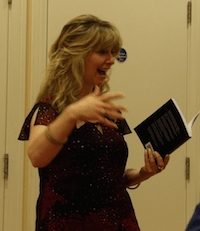 We recently interviewed Carmen Capuano, author of Split Decision. Here’s what she had to say about that novel, about her writing, and about herself.
Firstly, would you like to you tell us a little about yourself?
I think I surprise people when they get to know me. I am very open and love to chat but I can also be reserved and quiet at times. Being an author who conducts lots of book signings and talks, you do build up a certain amount of narcissistic qualities. After all I spend much of my time talking about my books, my writing and myself but I try to temper this with humour and honestly.
For example I often tell my blog readers about the stupid things I have done and I sometimes write these into my books as well. I have a tendency to do things without completely thinking them through and I guess this is what has provided me with the range of anecdotes I store in my head. It makes for interesting dinner party conversations but you really would not want to be there when I commit one of my inevitable faux pas.
For example one of the scenes in a book I am currently working on involves a character injuring another woman by accidentally scraping her stiletto heel across the other dancer’s calf, ruining her dress and making her bleed profusely. And yes I actually did that! Perhaps not on such a dramatic level but it is based on my reality!
When did you begin writing?
I began to write seriously about ten years ago but only became published in 2012. I can’t imagine ever not writing now…I think my soul might just wither away and die if that were the case!
What is your primary goal as an author?
To be fabulously rich and live in Malibu! No I am joking of course.
I want people to love my writing. It’s as simple as that. I know my characters have important things to say and I know that anyone who reads their tales will come away with an altered soul. For example I would challenge anyone who reads Split Decision to not feel for Natalie or to be thoughtful by the end of the book.
However I would dearly love to make enough money from the sale of the books to be able to donate substantially to worthy causes. I have already donated some profits to a few charities and would like to do more of that in the future. Here’s hoping!
Would you tell us a little about Split Decision?
It is a book about a choice the main character has to make, one which will alter the course of her life and one which ultimately she may not survive.
I wrote that book from my very soul and from my knowledge of human nature. I think that’s probably what comes across most in the reading of it, the blacks, whites and greys of people’s characters, how things can be so different to how we perceive them or alternatively exactly meet our expectations.
Humans frighten me to some extent…they can be cruel, intolerant and downright evil and even the best of us can sometimes be taken in by an attractive exterior. In a way, that’s what Split Decision is all about – peeling back the layers to see what really lies underneath…
What inspired you to write it? How did the idea for the plot occur to you?
I was inspired in the same way that I am inspired for most of my books…the main character appeared more or less fully fleshed out in my head and told me her story. The reason that particular book got written over all the other ideas and/or characters that were vying for my attention at the time was that Natalie was more demanding of me, her ‘voice’ was louder, more urgent and the more I listened to her, the more I knew that here was something which was unique and bold and captivating.
What do you think makes it stand out?
Apart from the above? It’s a book about teenagers but its readership is not restricted to that age group. It’s one of those rare stories that adults and older adults will also enjoy. Not only were we all teenagers once but the story is so finely crafted that there are depths of layers that will appeal across the ages.
As with all of my books there are unexpected twists and turns and character reveals which are both unexpected and thought-provoking.
How long did it take you to write the first draft of the manuscript of Split Decision?
I write in a sort of ‘continuous flow of consciousness’ style so only a few months but it was gruelling work and I spent most of it being emotionally drained by the situations the characters found themselves in.
What was the most challenging aspect of writing it?
Making sure that it reflected teenagers today and not how the world was when I was a teenager [ahem a few years ago now!]
It’s often said that every author writes herself into the story at some point. Is there a character with whom you associate in the book, and why is that?
Yes I think I am a mix of two of the main characters. I have Natalie’s insecurities and I also have one of the boy characters’ insight into human nature.
In general, do you feel you empathise with your characters or do you keep their personalities and situations distinct from your own?
No I empathise with them, even the bad ones to some extent. Mostly I have tried to show what it was in their earlier life that made them turn out the way they did. Although that said, I do think that some people are just plain ‘born bad’.
For example in Split Decision, the ‘baddie’ wasn’t always that way. Time, life and circumstance moulded him into what he finally became, whereas in The Owners, one of my vilest characters was probably just born that way, although the conceited and self-absorbed lifestyle he led as an eminent plastic surgeon no doubt contributed to his eventual fall.
Authors don’t necessarily like bracketing their work with someone else’s, but for a moment imagine Spilt Decision on sale on a web site, and down below it says: “People who bought Spilt Decision also bought…” What other books do you think might appear there?
I think my writing has qualities of Stephenie Meyer about it somehow although I admit that my style is much grittier than hers. Perhaps The Time Traveller’s Wife by Audrey Niffenegger.
If someone ever made a movie of Split Decision, which actors would you choose to play your characters?
Oh I LIKE this question! They would be young actors so perhaps the girl from The Hunger Games because she’s pretty and feisty and that is exactly how Natalie is. The two main male characters would be more difficult. They would have to be actors who were capable of a lot of depth, able to portray themselves as having perhaps a hidden agenda but done with a real subtlety and finesse. Any suggestions?
Is there an essential difference between writing for adults and writing for young adults?
Some authors say that is it ‘point of view’ but I think the simple truth is about keeping it real and creating depth. I don’t subscribe to the view that young adult books are simplistic – some are and some most definitely are not. Likewise not all books solely designed to be read by adults are complex and /or thought provoking.
My books tend to appeal equally to adults and young adults and I think that is a wonderful compliment. It shows that there is a freshness to the writing showing contemporary situations or issues but within the complexities of a well written story with plots and sub-plots, using characters that are as flawed and ‘human’ as we all are.
Some questions of a more general nature now. Generally do you have to feel inspired to write something or does it come easily to you?
Let’s put it like this – I have to be inspired to clean the house! Writing…well that just flows!
How and when do you find time to write?
I write most week days except for the school summer holidays, when I can be found climbing the walls, desperate to get back to my writing!
What makes you keep going?
All the good, kind, bizarre, vile, nasty and downright comical things that happen on a daily basis. Sometimes real life is just too good, strange and/or inexplicable that you can’t not use it to illuminate some point or other.
What’s next for you? What projects are you currently working on?
I am just finishing a novel about a troubled boy who rescues pigeons and through that act manages to find himself and his place in the world. A lot of that book was based on my own personal experience and I really empathised with the main character, Lucas. But there were funny moments too, like when he managed to convince himself that his father was Hugh Grant!
Incidentally I had to write in to Mr Grant’s publicity department in case that landed me in hot water…
What advice would you offer to new or aspiring authors?
If you don’t absolutely LOVE writing then don’t do it. It’s not a career, it’s a vocation and I do believe that in most cases, writing choses you, not the other way round!
How do you unwind when you’re not writing?
I love to watch a good film but it is unusual for me not to have worked out the plot and ending well before the actual end of the film. I Ceroc dance twice a month and have also recently taken up badminton. I am quite dire but I love it. I also discovered that I am a grunter when I go for the ‘big’ shots so I am having to get over the embarrassment factor there!
I still enjoy days out with my kids and dogs but they are becoming less frequent as the children get older. I guess it’s not cool for my 14 year old son to be seen out with me in public now, although he is my greatest fan when it comes to writing.
When you read a piece of writing by another author, what stands out for you? What do you admire in another writer, what thrills and delights you? Equally, what features of literature today do you dislike?
I hate two-dimensional characters or when there seems to be no motivation for a character’s behaviour. I want to be entertained but I don’t want it to be mindless, therefore I enjoy well-rounded stories which make me think.
Do you think there will ever come a time when you will retire from writing?
No. Never.
I’m now going to ask you for a list of whos and whys. Who were the most fascinating literary and non-literary persons you have ever met, and what did you get from these encounters? Whom would you like the opportunity to meet, and why? Whom do you wish you could have met from the past, and why?
I met Henry Winkler about a year ago. Because I was very involved with World Reading Day in Sandwell District Council, I was invited to an event where he was conducting a talk. He was very warm and open and made everyone feel at ease. In fact he was so deep in conversation with me prior to the event that some of the other guests mistook me as being part of his entourage! There was such a professionalism about him that I couldn’t help but admire him. To be so forthcoming to everyone and so self-deprecating made me realise that not all big stars have big egos. There was a humility about him I really admired.
Similarly, when I was just starting to do author talks, I encountered the lovely Gary Longden who has in fact just been ‘crowned’ Staffordshire Poet Laureate for 2014-15. After I had finished my spot, Gary came up to me, told me he had really enjoyed my talk and reading and offered to provide an honest book review for The Owners. To think that someone so talented and dedicated had even deigned to talk to me was humbling.
There are many, many others who have similarly influenced my thoughts about the writing community, too many to mention but I hope they will all know who they are!
If I were able to talk to novelists from the past my first choice would be Dickens. As a young girl I loved Dickens and Shakespeare and Enid Blyton equally but it would be Dickens who I would want to chat to. He was a philanthropist and a true altruist and I chose to study him to some extent at University. At a time when the working classes were oppressed and even worked to death, he was one of the few who instigated and championed change. We all have a lot to thank him and men like him for.
Do you have any regrets about anything?
I wish I had started writing earlier as at this rate I will have to live to 120 to get all my stories written down!
Finally, what is your guilty pleasure?
Chocolate and wine and then more chocolate and wine!

 P’kaboo Publishers, based in South Africa, are looking for people – especially young people but not exclusively so – who would be prepared to undertake direct selling of any or all of their books, for a part-time, commission-based income. There would be a 25% commission on every direct sale.
At present the only complication to this scheme would be stocking up. P’kaboo run on tight finances and are unable to pre-provide stock; but a representative does not need to buy a large stock, it can be as little as somewhere between 2 and 10 copies at wholesale price (retail less 25%) depending on how many the representative thinks he or she can sell. The Editor-in-Chief at P’kaboo says:
It’s an opportunity I’d love to give to young (and older) book fanatics in need of some extra income. Of course if one of these enterprising people can get bookshops interested in buying a few copies, a new price structure will have to be discussed.
This isn’t a new idea. It has worked for them in the past in South Africa, and now they are looking for people anywhere where books in English are saleable – the UK and the USA in particular. If you are interested, please contact this agency initially*. It is always possible that this little idea will grow into something bigger.
__________
*Please note any agreement will be between the representative and the publishing house, with no contractual obligations laid upon this agency.
 We recently had the opportunity to talk to Marie Marshall about her teen-vampire novelette From My Cold, Undead Hand. The book is scheduled for publication on 15th September, and will be available first of all as a download direct from the publisher. Shortly after that it will be available in Kindle format and print-on-demand from Amazon, and in due course there will be a bookshop launch. So fans of YA and vampire fiction can beat shopgoers to the book by buying pre-launch copies! What is more, early purchasers will be able to claim some bonus extras! This novel marks quite a departure for Marie; although she is well-known in Scotland for her macabre short stories, this is the first time she has tackled the vampire genre. We wondered why, so we asked, and her answers brought out more questions.
Why vampires? Tell us what brought this novel on.
What brought it on was an email from my trusty publisher, asking if I could write a teen-vampire novel. I took that as a request to write one on commission and just hurled myself into it.
There are many well-known writers of vampire stories, from Bram Stoker to Stephenie Meyer, so much so that it is a well-subscribed – some would say over-subscribed – niche of adult, teen, and graphic literature. What makes From My Cold, Undead Hand different?
Honestly I wouldn’t know. I have read Dracula of course, and Joanne Harris’s The Evil Seed, but very little else; oh, and watched Buffy the Vampire Slayer and Angel of course, and many of the old Hammer films. I have always avoided Twilight – you can call that prejudice if you wish. I’m very familiar with vampire images and myths, but I guess I must have absorbed this knowledge through some kind of cultural osmosis!
What I set out to do was just to write a story, most of it set in near-future with dystopic elements but with a nineteenth-century back-story I already had notes for. I cited a couple of obvious influences in the acknowledgments section of the book, but by-and-large my aim was to write a good story, almost as though the vampire theme was incidental. You could say that the true theme of the book isn’t all the vampire action, but the way that young people can get marginalised in an adult world. I think all writers of genre fiction ought to focus on writing the story first of all, and to hell with the conventions of the genre, if you see what I mean.
Tell us about Chevonne Kusnetsov your heroine. You mentioned that you like heroines to be young, strong-minded females.
Isn’t that the definition of ‘heroine’ anyway? I’ll take it that you mean ‘female protagonist’ if we’re going to generalise here. I do tend to write female protagonists that that are young and strong-minded – Eunice and Jelena in Lupa, Angela in The Everywhen Angels – I don’t know of that many major literary female characters who aren’t young and strong-minded. Well, maybe Bridget Jones, and maybe some of the women in the older Mills and Boon novels would be a bit limp, but not even they would be total dead losses. It is, of course, a literary convention to make your protagonist someone admirable, so that the reader can identify readily with that character. That’s reinforced by the first-person narrative.
Chevonne is, I suppose, a tomboy character. I wanted someone with whom young female readers could identify, but who wouldn’t alienate young male readers. I guess in many respects she is asexual. She certainly has other things on her mind than dating and what-have-you. I didn’t want her to be a Bella Swan – she’s closer to Buffy than that, but with a spiky haircut – so any hint of romance is very low key. But it does crop up, just wait and see.
I think one of the main reasons I needed her to be strong-minded was to highlight that theme of marginalisation I mentioned. Without giving too much away, I can tell you that her decisiveness doesn’t actually move the plot along, but rather she is swept along in it. Two of her most important decisions in the story actually have disastrous consequences for people close to her.
Did you know her surname is the Russian equivalent of ‘Smith’, by the way?
Tell us more about Dianne, Chevonne’s friend.
Di is easily led and, true to the theme of the book, easily marginalised, even by someone she loves. There’s a kind of gaucheness about her. There is a good reason why she sticks to Chevonne, and maybe a good reason why Chevonne sticks to her (although I deliberately don’t make that clear). She’s the character in the book whom I most want to cuddle and tell her everything is going to be all right, but of course… ooh… spoilers, spoilers!
I believe that anyone who pre-orders From My Cold, Undead Hand or is quick off the mark buying it, will learn more about Di from some extra material that I have written.
Chevonne’s mother is a bit of a shadowy figure. Are you planning to develop her at some point?
I wasn’t planning to, no. One of the things I did in writing this story was to focus on essentials, via the mind of the protagonist. So much is happening in the story that her mother is hardly on her mind, so she remains shadowy. It’s a part of Chevonne’s character, which is why I guess she doesn’t see the possibly consequences of some of her actions. Add to that I didn’t want Chevonne’s mother to become a kind of Joyce Summers figure (from Buffy), so I deliberately kept her out of most of the story.
Having said that, now that I have written the extra material about Di, I can see the potential for taking figures from the novel and writing short stories about them. Maybe stories not directly connected with the novel.
Every author writes him/herself into the story at some point. Which character do you associate with most, and why?
I don’t do that. What I do is mine my own feelings and put them into characters. I’m not Chevonne, I’m not Di, I’m not Miureen, I’m not Anna Lund.
I did do a bit of kick-boxing when I was young, like Chevonne, though. I’ll say that much.
The dystopian future you describe. Is this based on political views you hold or want to present?
Not particularly. I think that trying to do that spoils a book. For me, John Wyndham’s anti-religious stance coloured his science fiction novels too much, as did C S Lewis’s Christian triumphalism. Even Tressel’s The Ragged Trousered Philanthropists doesn’t quite work. You have to be a Dickens or an Orwell to get away with it. What I did was simply imagine a handful of modern trends and made them a little worse, and that was mainly to create a backdrop and context against which and in which the action could take place.
Which elements of that future, do you feel, will most probably eventually happen?
Well, as they are based on what is already happening… I think the strongest element is the manipulation of government and other institutions by unaccountable forces. The only difference is that they’re not vampires doing it at present. At least I hope not!
You set the action in America. Was there any reason for this? Do you think you have successfully captured a kind of American-ness in the novel?
Well firstly to market the book! Secondly I wanted to have the gun issue as an element. It gave me such a good title, which I appropriated from an NRA slogan. Before you ask, the story is neither pro-gun nor anti-gun. Guns are simply a fact in the novel, and although there are unforeseen consequences upon gun ownership laws from one of the major elements of action, that isn’t moralised upon. I guess anyone with strong pro or anti gun opinions will assume I’m on one side or the other, and I don’t mind if they do if it helps to promote the book!
As for American-ness, well that’s secondary. As I said, I focussed on what was uppermost in the protagonist’s mind, and that wasn’t giving chapter and verse about the Statue of Liberty of the Golden Gate Bridge. To help me with aspects of day-to-day life and expression I had a couple of American ‘beta readers’. I did have a battle with my editor over one vernacular phrase which he said was only heard in the mouths of the ignorant and would pass away. I conceded, but since then I have heard Hilary Clinton use it, so I’m claiming a moral victory!
Is there a future for the storyline? We heard noises of a sequel being under construction?
Yes, a sequel is more than half-completed. Without giving too much away, I have moved it forward, so that what we are going to learn about the storyline from From My Cold, Undead Hand we’ll get in back-story. There will be one important character, however, whom we shall meet again in the sequel. There is also a ‘threequel’ planned, though I have to confess the plot is going to be a bit tricky.
Having had this success with vampire fiction, is it something you are going to stick with beyond the planned trilogy?
Heavens, no! Sorry, I didn’t mean to sound so vehement there, like I’m slamming the door shut on vampire fiction. Obviously if a good story occurs to me I’ll write it. What I really meant was that I had put aside three ideas for other novels – partly written in some cases – in order to write this teen-vampire trilogy. I would like to go back to them, and get back to writing primarily for an adult readership.
Is there an essential difference between writing for adults and writing for young adults?
Oh that actually puts me on the spot. No, there isn’t. You can’t ‘write down’ to either. If anything, though, younger readers are less tolerant of superfluity, more acutely observant of inconsistencies, sharper in their use of their critical faculties – mainly because they haven’t yet been taught how to misuse them.

The passage is from the story-within-a-story, a translation of a rediscovered, nineteenth-century manuscript said to be the writings of a female vampire-hunter. You will find it embedded in Marie Marshall’s futuristic teen-vampire novel From My Cold, Undead Hand, which now has its own feature page at  P’kaboo publishers. Just click the book cover to be taken there. There are extras – text and an audio file from the diary of one of the characters – for a limited number of purchasers. For those of you who would like a paperback version in advance of any domestic print launch, you can get it at Amazon – same goes for a Kindle version.
The author, along with cover illustrator Millie Ho, are offering a couple of wallpapers using the cover artwork. They are available here.
We at the agency are getting very excited about the publication of this teen-vampire novel! As with all titles from P’kaboo Publishers in South Africa, the publisher is keen to find ‘partner’ publishing houses in the UK, the USA, and worldwide who would like to make this novel available to a wider readership. Please contact this agency for further details.
Michael Fry & Angus Konstamm: using the past to glimpse the future
Edinburgh International Book Festival
Royal Bank of Scotland Garden Theatre
20th August 2014
Previously published at The Mumble, 21st August 2014

Image #edbookfest
Confronting a nation’s history involves confronting its national myths. If the country is our own, that can move us right out of our comfort zone. As we in Scotland get closer to the referendum on independence, the issue of our history seems to take on more importance, and we are reminded of George Orwell’s words, from 1984, ‘He who controls the past controls the future. He who controls the present controls the past.’ Looking at the past, for the purposes of this debate, were historian-authors Michael Fry and Angus Konstam. Their chairman Joseph Farrell described them as ‘heavyweights’, and although Angus Konstam suggested that if the conversation flagged the two of them might entertain us with a bout of sumo, the chairman was clearly referring to their intellects.
 To Michael Fry, control of the past, as in the publication of books on Scottish history, has been left too long in academic hands, and has been a one-sided account of social and economic history replete with statistics. His bias was towards culture, society, and politics, in the search for what has kept Scotland Scotland; he has found that when a historian undertakes research he finds things which relate, albeit perhaps as echoes, to today, and that what we recognise are not the products of sudden upheaval but have deep roots.
In his book A New Race of Men – the title being a phrase taken from observations made in 1845 by the Rev. George Cruden, one of the few kirk ministers to have taken part in the Statistical Accounts of Scotland in both 1794 and 1845 – Fry presents a picture of a nineteenth-century largely at peace, with a conservative constitution (if I can use such a word) that supported that of England, union with the rest of the United Kingdom long since a ‘done deal’. Scottish capitalism was in the hands of men who had served their time as apprentices and shared social roots with the men who worked for them, giving rise to a sense of egalitarianism. In movements such as public health, it was recognised that contagion did not stop at the edge of working-class areas, and that therefore health belonged to all, not simply to the bourgeoisie.
Ideas like this didn’t fail to draw dissent from the floor. A questioner from North East England challenged the assumption that the nineteenth-century Scottish working class was any less exploited than the working class in his own area – and indeed the supposed difference that Michael Fry had suggested between the Scottish and English concepts of class did seem to sit rather awkwardly with a previous statement to the effect that the North East of England, for example, shared much of Scotland’s perceived remoteness from London and Westminster. Another questioner challenged the idea of the ‘done deal’ with its roots going back to the eighteenth century, citing the verse in ‘God Save the King’ about ‘rebellious Scots’; unfortunately her point merely perpetuated the canard that the verse is insulting to the Scots as a whole, when it is actually specifically directed at the Jacobites. Fry made this point in reply, however – that in the ‘age of revolution’, between 1789 and 1848, while the death toll in political causes in other countries was high, there was a total of twenty-three in Scotland. “I counted them’” he said.
 Angus Konstam, although principally a maritime historian, has been fascinated by Robert Bruce since reading a ‘Ladybird’ book about him. In his book Bannockburn, according to the event pre-publicity, Konstam ‘debunks some myths about the legend of Robert the Bruce’. He describes the modern popularity of Bruce as ‘a national talisman… wrapped up in romantic guff’. The definition of Bruce’s wars as ‘Wars of Scottish Independence’ was a later one, as are those of a nationalist or a class war, both of which would have been lost on Bruce himself. The thirteenth- and fourteenth-century conflicts were fought to ‘solve purely medieval problems’, and in them even Bruce himself changed sides more than once. Nevertheless, by the time of Bannockburn there was an unprecedented and unfamiliar wave of specifically Scottish patriotism that must have lent something to the subsequent sense of Scottish identity.
For all that, the presentation did leave me wondering what myths were going to be debunked. It is more than forty years since Nigel Tranter’s Bruce Trilogy was published, moving into popular fiction what historical study had long made known – Bruce’s career as a serial turncoat, and his murder of a rival. I listened to the account of Clifford’s unsuccessful charge against the Scottish infantry, and muttered to myself that surely the knowledge that horses will pull up before a solid mass of footsoldiers was known as far back as the Greek phalanx. However, we were brought back to popular myth when Konstam reminded us of the legend of Bruce and the spider – “It’s in the Ladybird book, so it must be true,” he said with a smile – for which there is no evidence beyond its existence in popular folklore.
 Of the two books foregrounded, it strikes me that Michael Fry’s is probably the more controversial. However both authors were kept busy signing copies of their books after the event. I have to say I was left wanting more time for public discussion with the two authors – to drill down into some apparent contradictions in what Michael Fry said, to challenge Angus Konstam further about whether the myths about Bruce were actually as powerful as he assumed. Joe Farrell did make the point that the pair seemed to have been drawn together simply because they were historians. This was the first time I had attended an event at the Book Festival when I wondered if either of the authors on stage was thinking to himself “If I were Germaine Greer or George R R Martin I would have this stage to myself. Obviously I’m considered second division!” I am happy to give the Edinburgh International Book festival the benefit of the doubt on this issue, because it does what it must to pack so much into its schedule, and by-and-large gets it just right.

Yes, P’kaboo Publishers have announced the date on which Marie Marshall’s long-awaited teen-vampire novel From My Cold, Undead Hand will be available from them in e-book form. Other forms will become available later, but for those readers with the facility to read the ePub format, buying direct is the way to go. You can pre-order, and as a bonus the first twenty-five purchasers will receive extras, including audio material!
The story itself is fast paced and gripping. The protagonist is Chevonne Kusnetsov, a teenager from New York City a generation or so into the future. The ecology is in crisis, electricity is scarcer and mainly generated by wind turbines mounted on top of buildings. Meanwhile, vampires stalk the dimly-lit streets after dark. But their very existence is denied by the government and the media. Expose!, a shadowy organisation formed to blow the vampires’ cover wherever it can, is routinely denounced for conspiracy-theory, anti-semitism, and downright insanity. The Resistance, a secret guerrilla army of vampire-hunters, organised in a cell-structure, is denounced as a ‘terrorist’ organisation. Chevonne has been recruited to the Resistance by her history teacher, and she’s tough – straight from the school kick-boxing club, she can use her fists and feet, but also a sword, a stake, and a laser-gun. What is the vampires’ ultimate plan? How does it involve the government? How does it affect Chevonne and her friends Di and E.J.?
The title, From My Cold, Undead Hand, is adapted from a famous slogan popularised by the National Rifle Association in the USA in defence of the right of American citizens to own and carry firearms. One of the features of the novel is that vampires, who in traditional fiction arm themselves with nothing but their teeth, exercise this constitutional right. Well, so do the vampire-hunters! By the end of the book there is a twist to this ‘right’. I asked Marie if her novel was deliberately politicised or partisan on this issue.
No, indeed not, but it did occur to me to introduce gun-carrying vampires and to have elements of the plot which developed the consequences of guns in this kind of conflict or adventure. Of course I have my own views about the issue, but there are two points I’d like to make. Firstly, I’m not American, and it’s America’s call. And secondly, no author worthy of the name lets her own views affect the way a plot is developing. The story goes how the story goes and that’s that. Anyhow it’s not ‘about’ guns. If it has a theme it’s about how young people tend to be marginalised.
That theme turns the dramatic crisis of the novel into a cliffhanger, leaving readers wanting more. Thankfully a sequel is half-written already, and there is even the possibility of a threequel. So who should read it?
It’s pitched at ‘young adult’ level, but it’s not ‘written down’. I think it will be snapped up not only by teenage readers but by adults who are into vampire fiction – and there are many, many of them ‘out there’. I just hope people out there will enjoy the ride as much as my ‘beta readers’ did.
From the point of view of this agency, it is encouraging that P’kaboo have shown faith in Marie once more, and are publishing her third novel on the 15th of September. Keep a watch for updates here, and by following @ColdUndeadHand on Twitter. Don’t forget that you can pre-order your copy!
Major-Minor: Languages and Nations
Edinburgh International Book Festival
Scottish Power Foundation Studio
16th August 2014
Previously published at The Mumble 17th August 2014
“In this age of globalisation, the English language has become increasingly dominant online and on the page. As an author writing in a different national or minority language how does this dominance affect your ability to tell your story and find an audience? Gaelic writer Martin MacIntyre and Arno Camenisch, who writes in Rhaeto-Romanic and German, join acclaimed translator Daniel Hahn to discuss.” (blurb on the Festival web site)
It’s difficult to know how to review a discussion. One angle from which to look at it might be the structure and the way it was chaired. Considering that it was to last forty-five minutes with fifteen minutes for questions and answers at the end, and to include readings by two authors, on that account it was spot on, tight, and well presented. Much credit goes to the chairman, David Codling. Of course a lot also depends on the qualities of the members of the panel, so let me introduce them.

Arno Camenisch reading from his novel ‘Alp’.
© Nick Barley
Arno Camenisch looks like a diminutive version of Simon Baker, right down to the disarming smile. He has stage presence, whether reading in his native Rhaeto-Romanic – a ‘minority language’ from southern Switzerland – or talking about his work. Despite, or maybe because of, his occasionally having to appeal to fellow panel-members for help with a word or phrase in English, he displayed a dry wit and an unconventional way of looking at things. “My choice of language depends on the weather,” he says. “If it is raining I write in Rhaeto-Romanic. If it is windy or sunny, German… I grew up in a polyphonous village. There were many languages… But television was king. We believed more in TV than god.”
To Arno ‘the sound is the soul of the text’. Martin MacIntyre agreed, speaking of ‘music’ as being the key, and praising the sound of Arno’s reading. Martin was born in Glasgow to parents originally from South Uist, and learned Gaelic from them. His spoken Gaelic is precise and clear, and when he read from a recent novel we could hear that he was not simply bilingual but effectively trilingual, and the Gaelic was interrupted by both English and Glaswegian. Frankly, that was the first time I had ever heard a passage of Gaelic with the word ‘woggle’ in the middle of it! “What excites me about Gaelic is that everyone who reads it can also read English,” he said. “There’s a tension between the two.”

Arno Camenisch and Martin MacIntyre
© Paul Thompson
Both writers translate from their ‘minority’ language into a neighbouring ‘majority’ language – from Rhaeto-Romanic to German, and from Gaelic to English. Daniel Hahn, national programme director of the British Centre for Literary Translation, said “Translation is never about the language, it is about languages. The relationship between languages… We use the big languages as a bridge for translation of minority languages. This is not an unproblematic relationship.” He highlighted this problematic characteristic by the example of a translation from Welsh to English of the words of an old man who spoke only Welsh and knew no English at all. During the question-and-answer session I had the opportunity to ask him to clarify this. I made the point that if I was reading, say, I Claudius, I suspended disbelief and simply accepted that I was reading the words of a native speaker of Latin who was writing to me in Greek; so how was a translation from Welsh to English any more problematical?

Daniel Hahn
© Paul Thompson
Daniel agreed, up to a point. “There’s a kind of sleight of hand going on when you read a translation,” he said. “We collude in that. We pretend we are reading it in the original language.” But then he made the very valid point that the relationship between Welsh and English, particularly in the context of the novel in question, is highly political, involving the identity of people where ‘to speak one is not to speak the other’. Martin MacIntyre reinforced this when he mentioned New Zealand writer Glen Colquhoun, who said that the problem was not that speakers of a majority language couldn’t ‘see’ the speakers of the minority language, but rather that they ‘couldn’t see themselves’. There is so much creativity in translation, not simply in how best to render a text literally, but how to find equivalent, analogous, or even vaguely similar concepts in two different cultures. “With modern Gaelic vocabulary, you are restricted in usage. It forces you to hone your prose in a different way,” said Martin MacIntyre. Such expressions sent us away from the event with much to think about.
 Bookseeker Literary Agency